Texas Covered ’26 Day 2 Talks Fighting Fraud, Surprise Billing & More
Complete Coverage
By: TAHP | Wednesday, November 4, 2026
CMS on Stopping Fraud Before the Money Goes Out
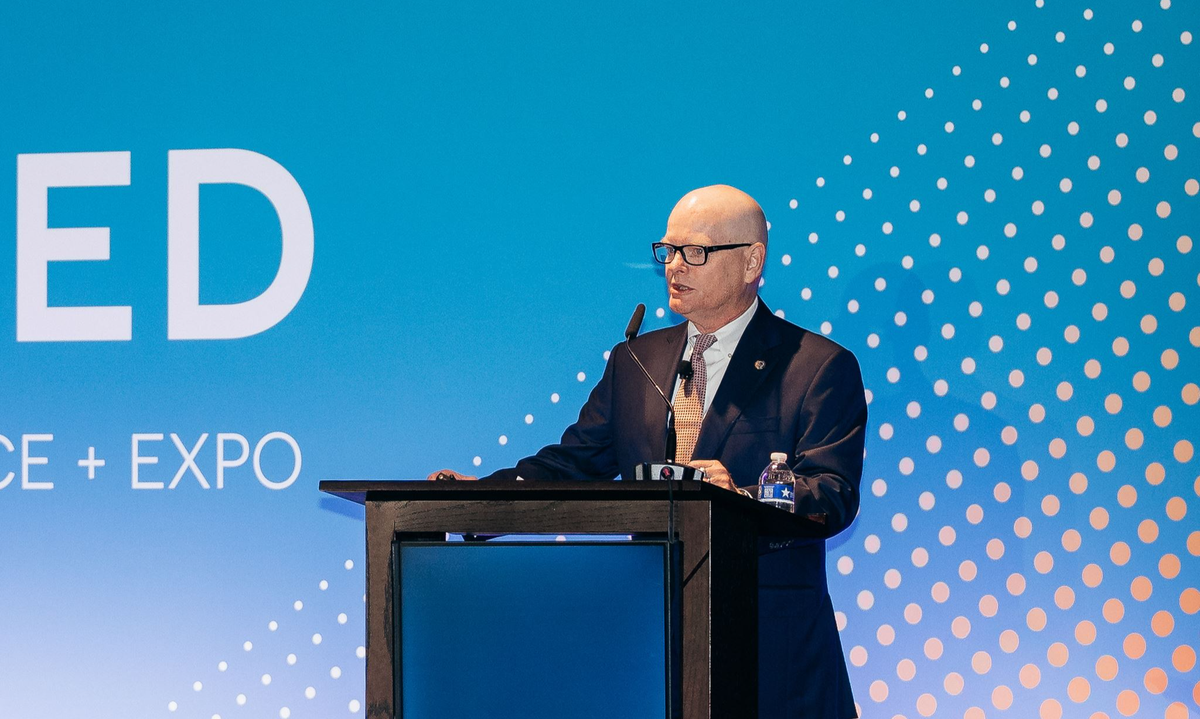
- Kicking off the Medicaid track: Kim Brandt, Deputy Administrator and Chief Operating Officer at CMS, joined remotely for a conversation with Calder Lynch of Humana Healthy Horizons on how the agency is catching fraud before paying claims instead of chasing the money afterward.
- Why the shift matters:
- A $100 billion problem: CMS estimates fraud, waste, and abuse costs Medicare, Medicaid, and the Marketplace about $100 billion a year. Chasing payments after the fact recovers about 10 cents on the dollar.
- Prevention pays: Medicare’s program integrity work saved $41.9 billion in fiscal 2025, up 59% from the year before. Two-thirds of that was stopped before payment by reviewing claims in real time and flagging suspicious providers at enrollment.
- Too easy to get in: Brandt’s own Labrador was successfully enrolled as a Medicare medical equipment supplier to show how weak the front door was. A proposed rule coming this fall tightens provider enrollment.
- What it means for Medicaid plans:
- Fraud follows the money: As Medicare cracked down on medical equipment abuse, more than 1,000 suppliers shifted toward Medicaid plans. CMS is using its exclusion authority to bar them from every federal program at once.
- A Medicaid fraud team is now live: CMS’s Medicaid war room, launched six months ago, has flagged $531 million in questionable payments and prompted more than 50 state enforcement actions.
- Her ask of plans: Share well-supported SIU leads with CMS and other payers, and review your own claims data for the same patterns.
Inspector General Winter: Where Texas Medicaid Dollars Are at Risk
- Who was up: Texas HHS Inspector General Raymond Charles Winter gave a tour of how his office polices $53 billion in state health spending, most of it Medicaid, and what plans should expect next.
- The takeaways:
- Recoveries by the numbers: OIG returned $475 million to taxpayers in fiscal 2026, about $25 back for every dollar spent on the office. It also ran more than 131,000 provider enrollment screenings, a workload that has climbed sharply with revalidation.
- Watch applied behavior analysis: Spending, providers, and enrollment in autism therapy have all jumped in the last four years. OIG’s analytics flagged one provider billing more than 2,000% above the median for comparable practices.
- Pay and chase isn’t going away: Winter said stronger front-end screening helps, but after 25 years in the field he expects bad actors to keep finding the money. “We’re always going to be chasing.”
- He wants more referrals: Plans supplied about 22% of OIG’s referrals last year, with wide variation per 10,000 covered lives. Winter’s point: when one plan catches a scheme and doesn’t share it, the same provider keeps billing the others.
The No Surprises Act Protected Patients. Then the Process Broke.
- Who was up: Pati McCandless of Maynard Nexsen moderated Rosemary Englert of AHIP, Josh Goldberg of Health Care Service Corporation, Melissa Bartlett of the ERISA Industry Committee, Katrina Daniel, formerly of the Teacher Retirement System of Texas, and Jack Hoadley of Georgetown University.
- The short version: The law did its main job: patients no longer get surprise bills. But court rulings stripped the guardrails from the process that sets provider payment, and a small set of providers now use it to collect far above market rates. Employers and taxpayers pay the difference.
- How bad it is:
- $22.5 billion and climbing: Hoadley puts the cost of the federal dispute process at $22.5 billion through 2025. Disputes rose 78% last year, and 2026 passed last year’s total in nine months.
- Four times the in-network rate: The median award is about 400% of the negotiated rate, with some specialties at 24 to 32 times. Two private-equity-backed physician groups and one billing vendor file a large share of all disputes.
- Arbitrators are paid to side with providers: They collect a fee only when a dispute is ruled eligible, and more volume means more fees. One arbitrator rules for providers 99% of the time.
- Volume as a weapon: Plans get three days to prove a dispute ineligible. Providers get 64 days to prepare and file thousands before holiday weekends. HCSC has more than 500 people on disputes. The result is numerous ineligible claims end up paid.
- Texas is the epicenter: The UT System plan has paid more than $120 million in awards, most tied to freestanding ERs. One freestanding ER filed 5,800 of its 6,400 disputes. Daniel estimates 2.5 points of the plan’s 9% premium increase come from this.
- What’s next:
- A new coalition of public purchasers: Daniel announced she and McCandless are forming CAPP, the Coalition for Affordable Public Plans to unite State and public employee plans on surprise billing abuse, drug prices, and provider consolidation.
- Washington is paying attention: Families USA on the left and the Paragon Health Institute on the right agree the process is broken, and the Congressional Budget Office has admitted its savings estimate was wrong. Englert’s reform pillars: protect patients, fix misaligned incentives, stop fraud, and require transparency from arbitrators.
- It’s employer money: 95.6% of HCSC’s awards are paid by self-funded employers, which is why Bartlett wants the employer voice in front of Congress.
- The Texas irony: Some Texas providers have opted their own employee plans into the state’s version of the NSA dispute process instead of the federal one.
Building Out Medicaid’s Mental Health Continuum
- Who was up: Shara McClure of McClure Health Solutions moderated Blake Serpa of BasePoint, Nathan Hoover of Superior HealthPlan, Dr. Ryan Van Ramshorst of HHSC, and Shena Ashmore of Oceans Healthcare.
- The gap: Texas Medicaid covers weekly therapy and inpatient psychiatric care, but not the two levels in between: intensive outpatient programs and partial hospitalization.
- How plans fill it today: All Medicaid managed care plans offer both services as “in lieu of” benefits, a federal option that lets a plan substitute a cheaper, clinically appropriate service for a covered one. It works, but each plan runs it differently, and HHSC has no written policy for either service.
- Why that’s not enough:
- Providers won’t build on a maybe: A day treatment slot costs $200,000 to build versus $1.5 million for an inpatient bed, but providers won’t invest in a service that isn’t a guaranteed benefit. So the capacity never gets built.
- Rural families drive or leave: One Tyler family spent two weeks in a Dallas hotel to get intensive outpatient care. Others go out of state.
- Demand keeps growing: Pediatric primary care visits for behavioral health rose 53% from 2014 to 2023, per a new JAMA study.
- The ask for next session: Make both services a covered Medicaid benefit for consistent treatment options and reliable coverage. Hoover expects it to be budget neutral by preventing admissions and readmissions. HHSC has filed a placeholder exceptional item for children’s behavioral health.
State Budgets Are Tight: What Medicaid Directors Will Expect from Plans
- Who was up: Two former state Medicaid directors, Cheryl Roberts of Virginia and Dana Flannery of New Mexico, talked with Matt Salo, who founded the National Association of Medicaid Directors, about the pressure states are under and how health plans can help.
- The problem: states are out of money.
- Medicaid is the biggest line in every state budget, and Roberts said governors see it as competing with schools and roads. New governors elected this year will open the books and ask for cuts.
- The federal reconciliation law makes it harder. Roberts counted 14 separate changes to Medicaid eligibility and financing that states must implement, each with its own deadline and its own effect on plan rates.
- New ideas now come with a trade. One current director with a billion-dollar shortfall told the panel that anything a plan proposes, even if it improves quality, gets the same reply: “What do I cut to pay for it?”
- What plans can do to be useful partners:
- Report cost spikes early. When a plan sees utilization climbing in one service, tell the state’s finance staff right away and ask for a meeting with all plans. Roberts said one plan doing this fixed a pharmacy cost problem in Virginia that would have taken the state a year to find on its own.
- Tell the human stories. Hospitals have been effective at telling Congress what Medicaid cuts mean on the ground. Plans should do the same, and partner with hospitals on outreach, since both lose members if coverage changes go badly.
- Reach members where they are. Roberts said no one under 40 opens mail. Plans have to find other ways to tell members about eligibility changes.
- What’s coming: Both panelists said states and CMS will ask plans to prove managed care works better than paying claims directly, especially that care coordination actually reaches members. Roberts said CMS is already holding rate approvals longer and asking what each increase buys.
Stay updated on the latest TAHP news
Articles written by TAHP’s team of policy experts that examine the research, trends, and impact of the most important health care policy issues facing Texas and the country today.

Weekly news clips assembled by the TAHP team that highlight the top headlines from the health insurance and health care worlds, as well as important political updates.